
For several years now I have been reading research on Historical Thinking Concepts. As a former history teacher, I am interested in what researchers have written about new ways of teaching history that encourages inquiry. It seems from what I have read that history taught in public schools remains caught in a transmission model – get out as much information as possible. This still seems like the accepted way to teach even though it is hard to imagine engaging students through a constant deluge of facts and dates.
Yesterday, I mentioned Fred Morrow Fling who started writing about historical inquiry over 100 years ago. In the last 25 years, many researchers have followed up on what he wrote. Now it is possible to find examples of inquiry skill teaching outlined in the Ontario curriculum. Still, something is lost in translation. How prevalent is the teaching of Historical Thinking Concepts? If it can be shown that inquiry-based teaching is still rare, what are the reasons for this? How are new teachers taught about inquiry? Does the learning of new teaching methodologies survive the first year in the classroom?
Could this be a research question? How do new teachers integrate historical thinking concepts in classroom instruction in the context of their first year in the classroom: A case study of the application of history inquiry skills during the early teaching experiences of teachers?
Historical Thinking
Beginning in the early 2000’s researchers including Wineburg (2001; 2018), Seixas & Morton (2013), and Barton & Levstik (2004) began to flesh out ideas on historical thinking. This reflects concurrent changes in science and math placing a greater emphasis on the development of inquiry skills (Grant, 2018; Sandwell, 2003; Saye & Brush, 2007,). However, what defines historical thinking skills varies. Grant (2018) separates these skills into two categories – broad-based approaches to understanding the nature of history most notably causation, continuity and change, and historical significance. Secondly, more source-based skills encompassing the comparison of different historical narratives, the use of evidence, and an examination of debates amongst historians (p. 427).
Likewise, Kelly (2014) outlines 14 different historical thinking skills. While every historian has their own particular list, Kelly proposes a collection of the ideas that outline the process a historian uses when constructing a historical narrative. In summary, Kelly (2014) proposes historical thinking consists of the ability to examine and assess primary and secondary sources, the ability to “recognize the strangeness of the past without being put off by that strangeness” (p. 23), a facility for asking probing questions, and an understanding on how to present interpretations of the past in clear ways. Seixas and Morton (2013) add historical significance, continuity and change, historical empathy, and ethics as important additions to this list. Grant (2018) includes the consideration of multiple perspectives and analysis of cause and effect as essential inquiry skills. Considering the comprehensiveness of this list, it is important to recognize the intellectual grounding provided by Fling’s earlier methodology.
Research indicates that the use of historical thinking concepts encourages students to inquire like historians (Stephens et al., 2005). The contemporary student is transformed into an active investigator using a variety of digital resources to flex their inquiry skills (King et al., 2019). Digital historical source material enables students to develop the critical historical thinking skills they need to create their own interpretations of the past (Bell et al., 2016). On the other hand, reliance on the textbook encourages an approach that favoures the lecture and teacher-centered instruction (Levesque, 2014). With the latter, students and teachers are robbed of the opportunity to use sources beyond the pages of the textbook (King, et al., 2019). However, the use of digital technology encourages students to participate in their education in more creative and innovative ways (Bennett, 2019; Guiliano, 2022).
Considering twenty years of scholarship on historical thinking concepts (Barton, & Levstik, 2004; Gibson, & Peck, 2020; Levesque & Clark, 2018; Seixas & Morton, 2013; Tally & Goldenberg, 2005; VanSledright, 2004; Wineburg, 2001, 2018) there is little evidence of a move away from memorization and the transmission of vasts amount of information toward an inquiry model (Gibson & Peck, 2020; Grant, 2018; Kelly, 2014). Why is there still a disconnect between theory and practice? The answer may have something to do with the amount of time K-12 students actually witness the use and practice of historical thinking concepts in their classrooms (VanSledright, 2011).

The Big Six – written by Peter Seixas and Tom Morton. A how-to manual for teaching Historical Thinking Concepts in Canada. How well is this text used in Canadian schools?
Vansledright (2014), examines the role that modeling plays in the education of pre-service teachers. If historical thinking is first introduced to pre-service teachers at the university level, how can they be expected to naturally assume a skill-based approach? He continues – how can you practice what you don’t know? Before they begin formal training, pre-service teachers have little hands-on experience using historical thinking concepts
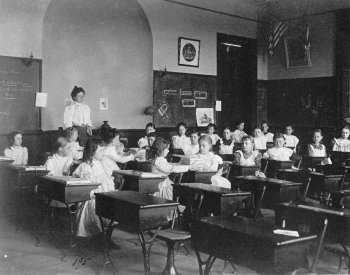
A simple arithmetic time-ratio calculation makes the point clear. The denominator: Give or take 18 years of teacher preparation via repeated apprenticeships of observation. The numerator: Approximately two semesters or one year of coursework (calculating generously by estimating time spent in school-based internships conservatively) in a formalized teacher preparation program designed to grow history teachers’ knowledge and assist them in rethinking common practices. The fraction: 1/18. Expressed as percentages, a prospective history teacher spends about 95 percent of the time learning to teach history via the apprenticeship of observation and a mere 5 percent of the time in a teacher education program that might offer opportunities to rethink the nature and limitations of that apprenticeship. (p. 175)

Expressed as percentages, a prospective history teacher spends about 95 percent of the time learning to teach history via the apprenticeship of observation and a mere 5 percent of the time in a teacher education program that might offer opportunities to rethink the nature and limitations of that apprenticeship. Vansledright (2014)
Grant (2018) and Bain (2005) theorize that the lack of inquiry-based practices in history instruction is a result of the structure of the school system. Multiple choice assessments encourage an approach that relies on the transmission of large amounts of information. The curriculum design process also plays a role. As Bain (2005) surmises, the bigger questions that often make history engaging are gradually pared away as the curriculum is “written, reshaped, vetted, voted upon and adopted” (p. 182). Teachers pressed for time with little practical experience of inquiry-based methods may be less inclined to switch teaching methods. Grant (2018) agrees, noting that a number of factors outside the control of the teacher contribute, “Large-scale assessments favor convergent thinking and, consequently, convergent teaching; inquiry-based teaching takes more preparation time; practicing teachers have relatively little experience learning history in an inquiry fashion” (p. 423).
Vansledright (2004) calls for the total reversal of how history is traditionally taught. Listening to lectures and reading from textbooks will do little to develop the skills needed to think historically. The solution, he claims, involves the investigation of historical problems with the assistance of primary sources. Importantly, educators need to learn how to analyze primary material so they, like the professional historian, can construct their own interpretations of the past. The heart of historical inquiry involves the assessment of historical sources. Vansledright (2004) emphasizes that any examination of source material must allow for the acceptance of varying points of view or bias. Without the ability to discern different historical perspectives, it will be impossible for the educator to construct new interpretations of the past (p. 117).
 Whole-Hearted