
I am trying something different for me here. Earlier this year, I took part in a writing exercise to get some of my main research ideas down on paper. Now I want to take excerpts from that paper and use these to further tease out my ideas on historical thinking and teaching. It would be amazing to get some thoughts on the next series of posts that will give me ideas on how to move my research to the next step. These are ideas in the process of being formed. For me, I learn by writing, so I hope to learn something through these posts. I have added some graphics to make these excerpts look more like a blog post. Any new ideas and thoughts written after the paper have been put in italics.

How is history currently taught in the classroom? Is methodology adapting to new ideas presented in academic research, and if so, what ideas and practices are favoured by educators? Current research (Guerrero-Romera & Perez-Ortiz, 2022) shows a significant disconnect between how history can be taught to engage the learner in historical inquiry and what is being practiced in the classroom. Is there a way to bridge the gap between theory and practice? This paper will explore how history is currently taught in K-12 classrooms. The gap between theory and practice will be examined along with research conducted on digital history methodology. The use of digital technology can be a way to transform classroom instruction (Nygren & Vikström, 2013), therefore, I will conclude by positing several ways digital history can facilitate the teaching of historical thinking concepts and suggest areas for further research.
The purpose and desired outcomes of history instruction have evolved over time. Osborne (2011) provides some insight into the changes that have taken place in the teaching of history in Canadian schools over the past 150 years.

First designed and employed as a tool for nation-building, particularly in English Canada, history was taught from textbooks such as The Canadian Pageant; Building The Canadian Nation; and Challenge and Survival (p. 56). After the Second World War, texts began to focus more on Canada and its place in the world. Increasingly, history education was employed as a way to develop responsible citizens motivated to act for the common good (Barton & Levstik, 2004). While the purpose behind the teaching of history gradually shifted, the methods used in the classroom proved more resistant to change. What had been considered innovations, were actually practices first introduced in the early 20th century (Kelly, 2014). Scholars such as Fred Morrow Fling were already favoring the use of primary documents over the textbook to fuel student inquiry (Osborne, 2003).
Problem-based learning, a more student-centered self-directed approach to learning (Maxwell, 2020), also had a long history stretching back to the first decade of the twentieth century (Kelly, 2014). The classroom remained resistant to change, favouring a style of teaching that emphasizes the transmission of great amounts of information to a passive audience (Gibson & Peck, 2020; Warring & Cowgill, 2017). This finding is backed up by the experiences of current pre-service teachers who typically describe to me their experiences in the history class as one burdened by the never-ending narration of dates and names.

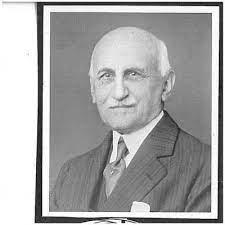
As early as 1913, Fling developed a methodology for historical inquiry that mirrors the main components of what later would be called historical thinking concepts. His method focuses on the investigation and evaluation of historical source material leading to a synthesis of available evidence and the creation of a new interpretation of the past (Osborne 2003). Students should be asking – what is the nature of the source? Who created the source? Does it corroborate or conflict with other sources? Students should never accept without reservation the investigations conducted by others. To do so, Fling explains, robs the student of the opportunity to conduct real historical inquiry (Fling, 1907).
This is the introduction. Here I am trying to set up the disconnect between what researchers write about how history should be taught and what actually happens in the classroom?
What is your experience as a student in the history class? How did you learn history? If you teach, do you practice in a way different from what you experienced?
 Whole-Hearted
Leave a comment